Best Strollers for Hong Kong Parents (2026 Guide)
MTR turnstiles, Mid-Levels hills, summer humidity and tiny flats decide which stroller actually works here. Our honest 2026 guide to the best strollers for Hong Kong parents.
The best stroller for Hong Kong is a lightweight, one-hand-fold travel stroller with a narrow frame, a deep UPF sun canopy and small but capable wheels. Models like the Joolz Aer2, Babyzen YOYO2, Cybex Libelle and Bugaboo Butterfly fit this profile because they collapse fast at MTR turnstiles, slot into a taxi boot, survive Mid-Levels slopes and tuck into a tiny flat. If you only buy one stroller here, buy the smallest one that still pushes comfortably uphill and shades your child from the summer sun.
That is the short answer. The longer answer depends on where you live, how you travel and how big your child is getting. Hong Kong is one of the most stroller-hostile and stroller-essential cities on earth at the same time, and the gear that thrives in a London suburb often becomes a daily punishment here.
Let me explain why, then give you the picks.
Why Hong Kong breaks "normal" strollers
Strollers are usually designed for flat pavements, car boots and lifts. Hong Kong gives you stairs, slopes, turnstiles, heat and floor space measured in single digits.
Here is what actually shapes the decision.
The MTR is a folding test, not a ramp
The MTR is brilliant, and most major stations have lifts. The problem is the day-to-day friction. Standard fare gates are narrow, so you will use the wide gate, and even those are not generously wide. A stroller frame around 45 to 50 cm across passes far more easily than a chunky travel system.
Lifts exist but they are often tucked at the far end of a platform, frequently full, and at peak hours you can wait through two or three cars before you fit. Many parents give up and take the escalator, which means lifting a folded stroller with one hand while holding a toddler with the other. That single scenario, fold and lift in one motion, eliminates half the strollers on the market.
Buses and minibuses mean folding on the move
On franchised buses you can usually keep your child seated in the pram space on the lower deck if it is empty, brake engaged. But it is often taken, and on a packed route you may be asked to fold. Green minibuses are the real test: they are small, they fill up, and there is rarely space for an open stroller. You fold, you hold your child, you find a seat. A two-hand, multi-step fold while a driver waits and a queue forms behind you is genuinely stressful. A one-hand fold is the feature that pays for itself.
Hills and stepped streets are everywhere
If you live in Central, the Mid-Levels, Sai Ying Pun, Sheung Wan or older parts of Kowloon, your "walk" includes gradients that would qualify as a hike elsewhere. Some lanes are literally stepped. Tiny hard wheels skitter and judder on slopes and rough paving, and they catch in tram tracks and tactile paving. Slightly larger wheels with a lockable front swivel give you control going downhill, which matters more than going up.
Heat and humidity are not a footnote
From roughly May to September the city sits in high heat and brutal humidity, and a stroller in direct sun becomes an oven at a child's level. Two things matter: an extendable canopy with a real UPF rating that actually reaches down over the seat, and breathable fabric with mesh panels so air moves. A reflective or peek-a-boo mesh window helps you check on a sleeping baby without unzipping the whole hood. Skip the thick padded liners that look cosy in a showroom and trap heat on the street.
Flats are small and so is your storage
The average Hong Kong flat does not have a hallway you can park a stroller in. It often does not have a hallway at all. The folded footprint is a daily quality-of-life issue, not a once-a-year travel concern. A stroller that stands folded on its own, slides behind a door or fits in a wardrobe corner will make you far happier than one you trip over every morning.
Taxis, wet markets and shop aisles
Hong Kong taxi boots are small, and the spare wheel eats half the space. A compact fold that drops into a boot without a fight saves arguments with drivers. Inside wet markets and older shops the aisles are tight and cluttered, so a narrow frame and a tight turning circle keep you from clipping crates of bok choy and apologising your way through.

Quick picks: the short list
If you want the summary and nothing else, here it is.
- Top all-rounder for many Hong Kong parents: Joolz Aer2. Lies flat from birth, weighs about 6.5 kg, and has a self-standing one-hand fold that takes about a second. It folds small enough to drop into a car boot (or even a small front trunk) and is IATA cabin-compliant for carry-on, which is exactly the profile that survives an MTR turnstile, a taxi and a flight.
- Best all-round city stroller: Babyzen YOYO2. Light, narrow, one-hand fold, cabin friendly, strong accessory ecosystem.
- Best value lightweight: Cybex Libelle. Very light, very compact fold, a noticeably lower price than the YOYO.
- Best for tiny-flat living and travel: GB Pockit family. Folds smaller than almost anything on the market and fits in an overhead bin or a large bag.
- Best premium one-second fold: Bugaboo Butterfly. Polished, comfortable, compact, with a quick standing fold, at a premium price.
- Best from birth as a travel system: a compact pushchair that takes an infant car seat or a lie-flat carrycot, if you drive or take taxis with a newborn.
- Best for two kids: a slim side-by-side or an inline double, accepting that both are harder work on the MTR than a single.
What to actually look for: buyer's criteria
Before you fall for a colour or a brand, score any stroller against these Hong Kong specific points.
- One-hand fold. Can you collapse it while holding a child? Try it in the shop. This is the single most important feature here.
- Folded size and self-standing. Will it stand on its own and fit your flat, your taxi boot and an overhead bin if you fly?
- Frame width. Narrower clears MTR wide gates and shop aisles. Around 45 to 50 cm is the comfortable zone.
- Wheels and suspension. Bigger than tiny, with some suspension, for slopes, paving cracks and tram tracks. A lockable front swivel helps on hills.
- Canopy and ventilation. Extendable UPF canopy plus mesh panels for the summer. This is non-negotiable from May to September.
- Recline. A near-flat recline matters for newborns and for the inevitable nap mid-outing.
- Weight limit and longevity. Many compact strollers carry up to around 22 kg, which can take you to roughly age four. Check the figure for your model.
- Push weight versus carry weight. A stroller you push 90 percent of the time can be a little heavier if it is comfortable. A stroller you carry up escalators daily should be as light as you can get.
Category breakdown
Lightweight and compact travel strollers (the Hong Kong default)
For most families here, this is the category. These strollers weigh roughly 6 to 7.5 kg, fold small, and are built to be carried.
Our Pick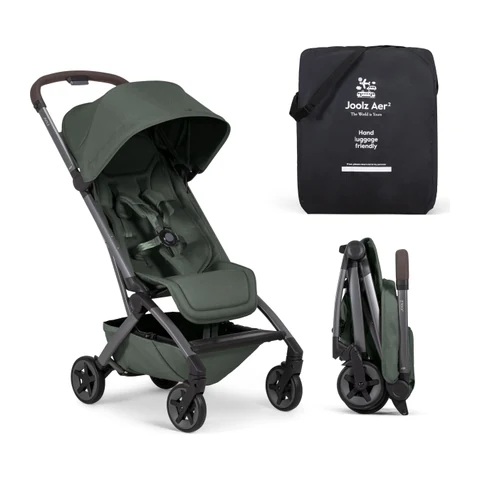 Joolz Aer2
 has become a default recommendation among local parents, and it earns it. It weighs about 6.5 kg, reclines fully flat so it works from birth, and folds with one hand in roughly a second into a self-standing package of about 44 by 53 by 23.5 cm. That folded size is the headline for Hong Kong: it drops into a small taxi boot or a car frunk without wrestling, and it is IATA cabin-compliant, so it usually comes onboard as carry-on (always confirm with your airline). You steer, recline and fold it one-handed, which is precisely the move you make at a packed wide gate with a toddler on your hip. It carries up to about 22 kg, so it lasts to around age four, and the UPF 50+ canopy pulls down properly for the summer. The basket is modest and it sits at the premium end on price, but as a single do-everything stroller here it is hard to fault.
Joolz Aer2
Joolz Aer2 has become a default recommendation among local parents, and it earns it. It weighs about 6.5 kg, reclines fully flat so it works from birth, and folds with one hand in roughly a second into a self-standing package of about 44 by 53 by 23.5 cm. That folded size is the headline for Hong Kong: it drops into a small taxi boot or a car frunk without wrestling, and it is IATA cabin-compliant, so it usually comes onboard as carry-on (always confirm with your airline). You steer, recline and fold it one-handed, which is precisely the move you make at a packed wide gate with a toddler on your hip. It carries up to about 22 kg, so it lasts to around age four, and the UPF 50+ canopy pulls down properly for the summer. The basket is modest and it sits at the premium end on price, but as a single do-everything stroller here it is hard to fault.
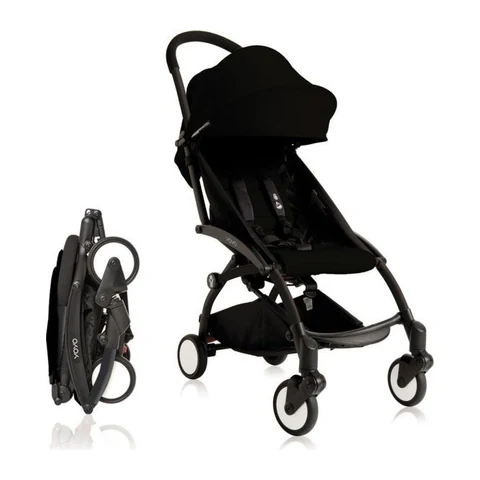 Babyzen YOYO2
 is the one you see most on the MTR for a reason. It is light at around 6.2 kg, narrow, and has a genuine one-hand fold once you get the rhythm. It folds small enough that many airlines accept it as cabin baggage, which doubles as proof that it is easy to carry and stash. The downside is price, and the fact that the newborn and accessory bits are sold separately, so the real cost climbs.
Babyzen YOYO2
Babyzen YOYO2 is the one you see most on the MTR for a reason. It is light at around 6.2 kg, narrow, and has a genuine one-hand fold once you get the rhythm. It folds small enough that many airlines accept it as cabin baggage, which doubles as proof that it is easy to carry and stash. The downside is price, and the fact that the newborn and accessory bits are sold separately, so the real cost climbs.
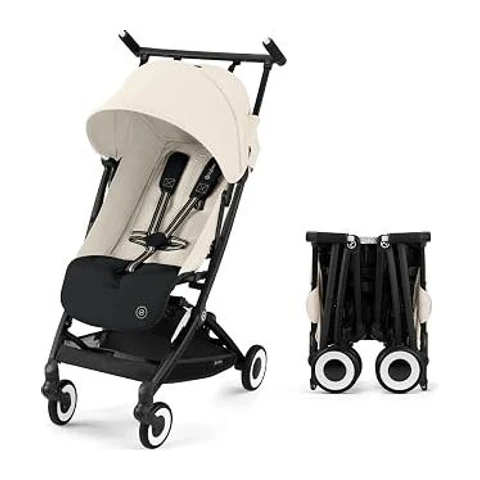 Cybex Libelle
 is the smart-money pick. It is genuinely light, folds into a remarkably small package, and costs clearly less than the YOYO. The fold is compact but not one-hand effortless, and the seat is more basic. For a second stroller, a travel stroller or a budget-conscious first stroller, it is hard to beat.
Cybex Libelle
Cybex Libelle is the smart-money pick. It is genuinely light, folds into a remarkably small package, and costs clearly less than the YOYO. The fold is compact but not one-hand effortless, and the seat is more basic. For a second stroller, a travel stroller or a budget-conscious first stroller, it is hard to beat.
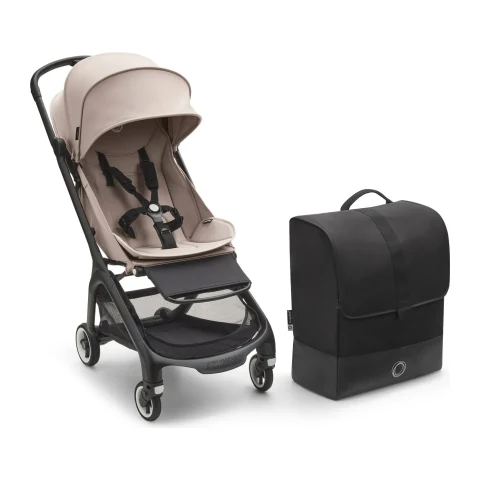 Bugaboo Butterfly
 sits at the premium end of compact. It has a quick, near one-second standing fold, a comfortable seat and a deep canopy, at a weight a touch higher than the YOYO. If your budget stretches and you want polish, it is excellent. If you are counting grams for daily escalator lifting, the lighter options edge it.
Bugaboo Butterfly
Bugaboo Butterfly sits at the premium end of compact. It has a quick, near one-second standing fold, a comfortable seat and a deep canopy, at a weight a touch higher than the YOYO. If your budget stretches and you want polish, it is excellent. If you are counting grams for daily escalator lifting, the lighter options edge it.
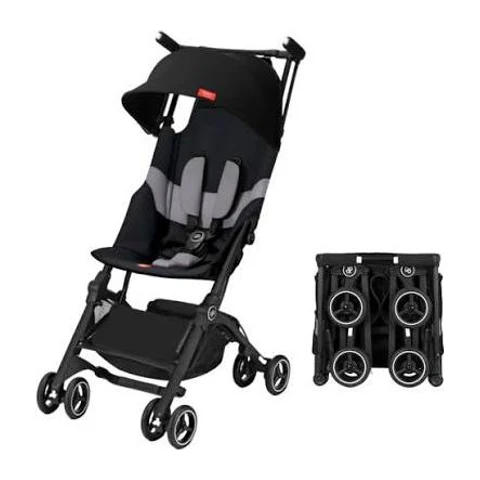 GB Pockit+
GB Pockit and Pockit+ are the extreme compact option. The original Pockit held a record as the world's smallest folding stroller, and the family folds down to a size that genuinely fits in a large handbag or an aircraft overhead bin. The trade-offs are a smaller, more upright seat, a shorter canopy and a firmer ride, so they shine as a travel or backup stroller more than an all-day daily driver, especially for a newborn.
GB Pockit+
GB Pockit and Pockit+ are the extreme compact option. The original Pockit held a record as the world's smallest folding stroller, and the family folds down to a size that genuinely fits in a large handbag or an aircraft overhead bin. The trade-offs are a smaller, more upright seat, a shorter canopy and a firmer ride, so they shine as a travel or backup stroller more than an all-day daily driver, especially for a newborn.
Umbrella strollers (cheap and cheerful, with limits)
Classic umbrella strollers are light and inexpensive, and you will find plenty in local baby shops. The catch is the fold: most need two hands and end up long and awkward to carry, the canopies are often small, and the recline is shallow. They can work as a knock-about spare, but as a primary stroller in this city they fight you on exactly the days that matter.
All-terrain and three-wheelers
Air-filled tyres and proper suspension are lovely on Bowen Road, the Peak circuit or a country-park trail, and they roll over rough paving and slopes with ease. The problem is everything else. They are wide at the MTR, heavy on escalators, awkward in a taxi boot and a space hog in a small flat. Unless you genuinely hike with your child or live somewhere unusually hilly and car-dependent, an all-terrain model is a second stroller, not your only one.
Travel systems and from-birth setups
If you drive or take a lot of taxis with a newborn, a compact pushchair that accepts an infant car seat or a lie-flat carrycot is worth considering, so your baby can move from car to stroller without waking. The honest counterpoint is that full travel systems are bulky, and many Hong Kong parents skip the car seat entirely because they rarely drive, using a soft carrier for the first few months and a compact stroller once the baby can sit more upright.
Double strollers
Two children in this city is genuinely harder. Side-by-side doubles can be too wide for some MTR gates and many shop aisles, so measure before you buy. Inline (front-and-back) doubles are narrower but longer and heavier, which makes folding and lifting tougher. Many parents of two end up with one child in a compact single and the older one walking or on a buggy board, simply because it is the only setup that survives a turnstile.

A Hong Kong stroller checklist
Print this, or just keep it on your phone for the shop.
- Fold it with one hand while holding a 5 kg bag of rice. If you can, you have a winner.
- Measure the open frame width and check it against an MTR wide gate.
- Confirm it stands folded without falling over.
- Check the folded size against your taxi boot and, if you fly, your airline's cabin allowance.
- Push it over a kerb and on a slope, not just the showroom floor.
- Pull the canopy all the way out and look for mesh panels and a UPF rating.
- Recline the seat fully to confirm it handles naps.
- Check the upper weight limit so it lasts past the toddler stage.
- Pick up and carry it for a minute. That is your daily reality on escalators.
How this plays out on a real day
Picture a typical outing. You leave a small flat in Sai Ying Pun, so the stroller has been folded behind the door overnight. You walk downhill to the MTR, brake riding the swivel lock on the steeper bit. At the station the lift is full, so you fold one-handed, sling the toddler on your hip, and take the escalator. Three stops later you are heading to a playground, then on to one of the many family-friendly things to do across the city. By afternoon it is hot, the canopy is fully out, the mesh window is open, and your child naps in a near-flat recline while you grab a taxi home and drop the folded stroller into a tight boot without a struggle.
Every step of that day rewards small, light and quick to fold. Almost none of it rewards big and plush. That is the whole argument in one walk.
Where to test and where to go
Buy from a shop that lets you fold and push the stroller yourself before paying, ideally one with a slope or a kerb nearby rather than only flat carpet. Local baby retailers in areas like Mong Kok, Causeway Bay and Tsim Sha Tsui carry the major brands, and the big chains run regular promotions, so the gap between the YOYO and the Libelle can shrink at sale time.
Once you have the right stroller, the city opens up. Check our guide to the best family events and seasonal happenings to plan your weekends, and use the stroller checklist above to make each outing smoother rather than something you dread.
Common mistakes Hong Kong parents make
A few patterns come up again and again, usually because the advice came from somewhere with cars and driveways.
Buying for the showroom, not the street. That plush, heavy travel system feels luxurious on flat carpet under bright lights. It feels very different at 8am at a packed wide gate with a toddler melting down behind you. Always picture your worst commute, not your best Sunday walk.
Underrating the canopy. People obsess over wheels and ignore sun coverage, then spend a Hong Kong July draping a muslin over the hood because the canopy stops halfway down. A canopy that fully extends and has a UPF rating is worth more here than a slightly comfier seat pad.
Going too big "to be safe." A larger stroller does not future-proof you. Children grow into walking, scooters and buggy boards, and the bulky stroller you bought for longevity becomes the thing you resent every day. Buy for the next eighteen months of city life, not an imagined road trip.
Forgetting to measure their own home. Folded dimensions on a spec sheet mean nothing until you check them against your actual entryway. Measure the gap behind your front door and the space under a console table before you commit.
Skipping the carry test. Strollers are sold as things you push. In Hong Kong they are also things you carry, up escalators and onto minibuses. Pick the thing up in the shop, hold it for a full minute, and only then decide.
Accessories that genuinely help here
You do not need most of the add-ons brands sell. A few earn their place in this climate and this city.
- A clip-on fan. From late spring a small rechargeable fan clamped to the frame makes a real difference for a child sitting low in still, humid air.
- A proper rain and wind cover. Showers arrive fast, and a cover that actually seals beats a flimsy plastic sheet. Choose one with ventilation so it does not become a sauna.
- A cup and phone holder. Minor, but useful when you are juggling an Octopus card, a phone and a hot child on the move.
- A travel or transport bag. If you fly often, a padded bag protects a compact stroller as cabin or gate-checked baggage and makes carrying it through the airport easier.
- A buggy board. When a second child arrives, a board on the back of a single stroller is often a smarter answer than a full double, given how tight gates and aisles are.
Skip the heavy footmuffs and thick liners unless you are heading somewhere genuinely cold. For most of the Hong Kong year they trap heat against your child for no benefit.
The bottom line
For the overwhelming majority of Hong Kong parents, the best stroller is a lightweight, narrow, one-hand-fold travel stroller with a deep UPF canopy. The Babyzen YOYO2 is the safe all-round choice, the Cybex Libelle is the value champion, the GB Pockit family wins on pure compactness, and the Bugaboo Butterfly is the premium pick. Match the stroller to your neighbourhood and your transport habits, prioritise the fold above all else, and ignore the showroom temptation to go big. In this city, smaller almost always wins.